Getting Glass Annealing Right with IR Control
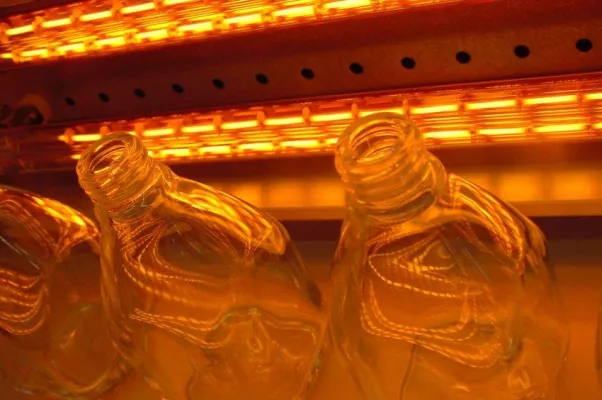
Anyone who’s worked with glass jewelry or lab gear knows that feeling of dread when a piece cracks. It usually happens because of internal stress—basically, the glass cooled too fast or unevenly, leaving “frozen-in” tension. One tiny cold spot or a sudden spike in heat, and the whole thing snaps. To stop that from happening, we use infrared (IR) heating elements that stay steady within 0.1°C. Why bother with that kind of precision? Annealing happens in a tiny window. If your heater swings by just a couple of degrees, you might blow past the strain point. At that stage, the glass doesn’t just soften—it can actually lose its shape. By keeping things stable to 0.1°C, you can hold the glass exactly where it needs to be. The molecular structure settles down, but the fine details of your jewelry stay sharp. The difference between heating air and heating glass Most heaters just warm up the air around the object. IR is different. It hits the glass directly. We use short-wave IR because it actually penetrates the surface to reach the core. This gets rid of that annoying temperature gap between the outside and the inside. You get a uniform soak, which is exactly what you want. We usually build these systems with high-wattage quartz envelopes to handle the load. One tip: make sure your PID controllers are tuned for how fast IR responds. These lamps heat up fast. If your settings are too aggressive, the system will “hunt” for the right temperature, bouncing back and forth and causing the very thermal shock you’re trying to avoid. The reality of setting it up Fitting these lamps into a lab setup can be a bit of a puzzle. Space is always tight. You have to get the distance between the lamp and the glass just right. Too close? You’ve got a hot spot. Too far? Your cycle time doubles. I usually suggest a mirrored reflector to bounce the wasted heat back into the chamber. But keep in mind, these high-precision elements put out a lot of heat. If your cabinet ventilation isn’t up to the task, your electronics are going to cook.